
RTX (RTX) Lands Engine Wins And A $1 Billion Military Support Deal
RTX (RTX) has reported new commercial wins and a $1 billion military support deal with Pratt & Whitney, an RTX (RTx) business, as British Airways and Jackson Square Aviation select GTF engines for its Airbus A320neo fleet. These announcements highlight the company's integration of civil aviation orders and defense support through its Pratt &Whit segment. The new GTF engine wins, the US$1b sustainment contract, and the 3D printed TJ150 test all point to Pratt & Whitepet being central to the company’s commercial and defense mix. However, there are also minor risks, including high debt and an unstable dividend track record, balance sheet strength and payout consistency. The stock trades at US$193.51 versus a consensus analyst target of about US$215, which is roughly 10% lower than its fair value.

Self-Driving Lab Accelerates 3D-Printable Alloy Discovery
University of Toronto researchers have developed a self-driving laboratory that uses artificial intelligence, automated metal printing, and experimental testing to discover 3D-Printable alloys for high-temperature environments. The lab identified six printable alloy made from nickel, cobalt, and chromium, which were designed for additive manufacturing applications in aerospace, power generation, and other industries where components face intense heat, pressure, and rapid temperature changes. The study, published in npj Advanced Manufacturing, demonstrated how closed-loop laboratory systems can explore large materials-design spaces while accounting for whether a proposed material can be manufactured successfully. The researchers developed ALPHA-AM, an active-learning framework that combines physics-informed computer models, high-throughput experiments, process optimization, and laser-directed energy deposition. The system moved between lower-risk searches focused on printability and higher-risk search that pursued greater hardness.
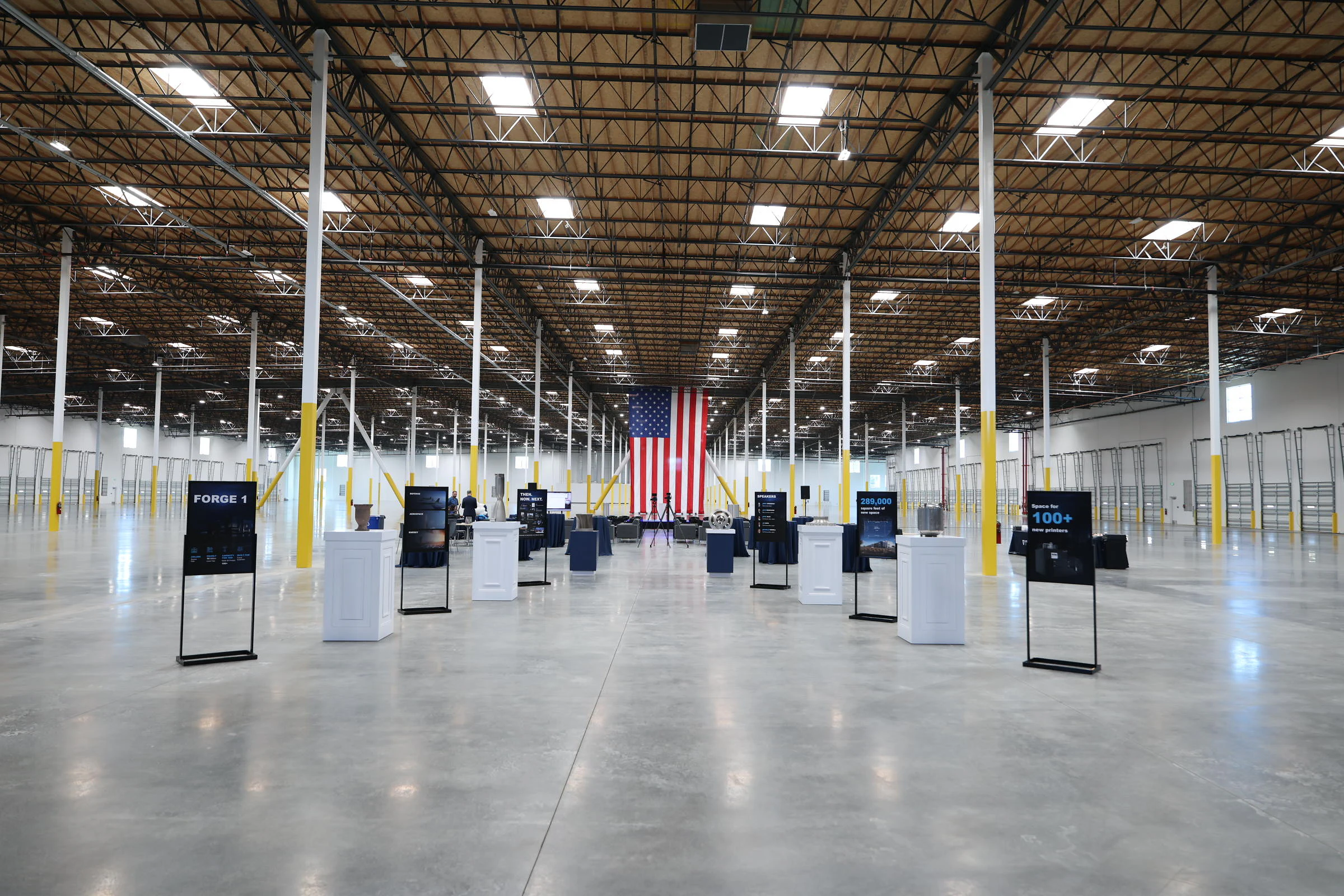
Velo3D Opens One of North America's Largest Metal Additive Factories
Velo3D has opened its Livermore Production Campus, Forge 1, one of North America's largest metal additive manufacturing facilities. The nearly 289,000-square-foot campus responds to demand for advanced manufacturing capabilities and expands Velo3D's ability to move programs from qualification into production. Forge 1 includes approximately 270,000 square feet of production space and infrastructure designed to support more than 40 large-format metal additive Manufacturing systems, with capacity to expand beyond 100 systems over time. The facility also supports machine assembly, production-scale printing, post-processing, inspection, quality assurance and customer acceptance. The company expects to operate up to 125 systems across both campuses, creating one of America's most integrated metal additive factories.
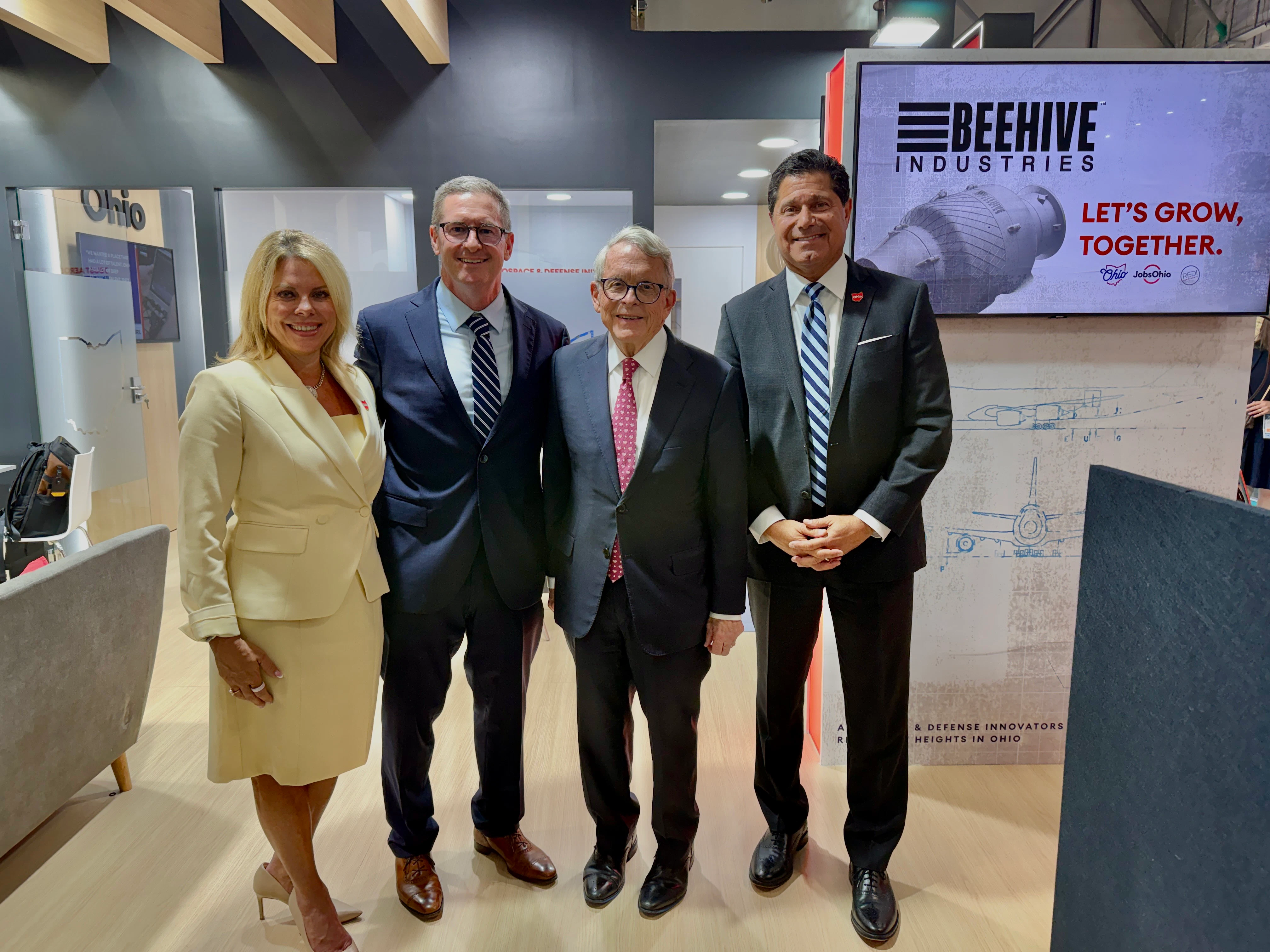
Beehive to Expand 3D-Printed Jet Engine Facility in Ohio
Beehive Industries, a manufacturer of 3D-printed jet engines for uncrewed aerial defense applications, plans to expand its operations in Southwest Ohio to create more than 200 new jobs and invest $70 million in the region. The expansion will be announced at the Farnborough International Airshow and will create over 200 new roles and invest over $70m in the area. The company attributes its success to the caliber of the workforce they are building in SouthwestOhio. An incentive package is being designed to support hundreds of new Ohio jobs over the coming years as Beehive scales production in the the region, seeking a Job Creation Tax Credit from the Ohio Department of Development.
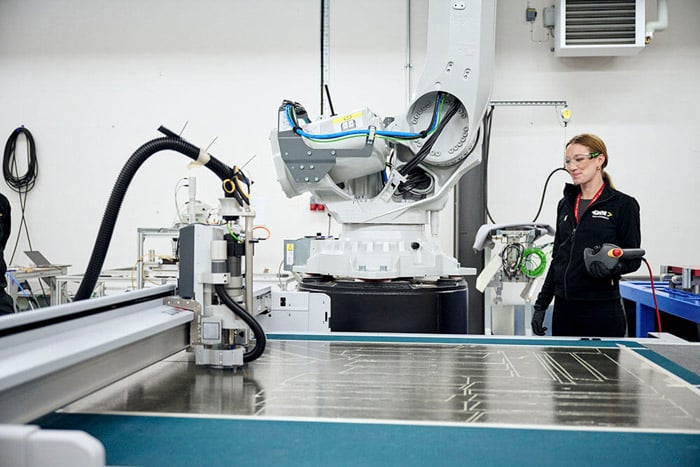
GKN Bolsters Pratt GTF Specialist Parts Repairs
GKN Aerospace has secured several agreements with Pratt & Whitney regarding component repairs for the geared turbofan (GTF) engine program. The agreements cover over 20 different component types across GKN's three MRO sites, including critical engine cases, structures and rotating parts across the PW1500G and PW1900G variants. GKN Aerospace will use Directed Energy Deposition (DED) additive repair techniques in Sweden to repair the PW 1500G and W1900G exit guide vane stators, stationary aerodynamic stators located directly behind the engine's fan or turbine stage. At its expanded MRO site in San Diego, California, GKN will use thermal coating technologies and new shot peening methods for the GTF. These agreements further build capability in the US.

ESA moves its orbital metal 3D printer closer to operational use
The European Space Agency (ESA) has taken a step towards routine metal additive manufacturing in orbit, with astronaut Sophie Adenot retrieving a fifth sample from the Metal 3D Printer Technology Demonstrator aboard the International Space Station (ISS). The unit, described by ESA as the first metal 3D printer in orbit and launched to the station in 2024, has already been examined at ESTEC, ESA’s technical center in the Netherlands, and the Danish Technical University (DTU). The fifth sample will be tested at the German Aerospace Center (DLR) and ESTEC. The results will be published in the coming weeks. The printer was built by Airbus Defense and Space under an ESA contract, with co-funding from Airbus.
Global Automated 3D Printing Market Report Published, Examines Industrial, Automotive, Aerospace, Defense and Consumer-Product Demand
The global automated 3D printing market is expected to increase from USD 2.91 billion in 2025 to USD 3.99 billion in 2026, before reaching USD 18.64 billion by 2031. This growth is driven by advances in production automation, artificial intelligence, sensor technology, robotics and additive manufacturing software. The market analysis covers hardware, software and services, as well as automated production, material handling, part handling and multiprocessing. The report also evaluates prototyping, end-use part manufacturing and applications across industrial manufacturing, automotive, aerospace, defense and healthcare. It highlights the growing adoption of automated additive manufacturing in North America and Asia-Pacific, with North America generating 34.83% of global market revenue in 2025. Healthcare applications are expanding as AI-enabled platforms generate patient-specific implant designs from medical imaging data. Services are forecast to grow at a 37.21% CAGR through 2031, outpacing hardware.
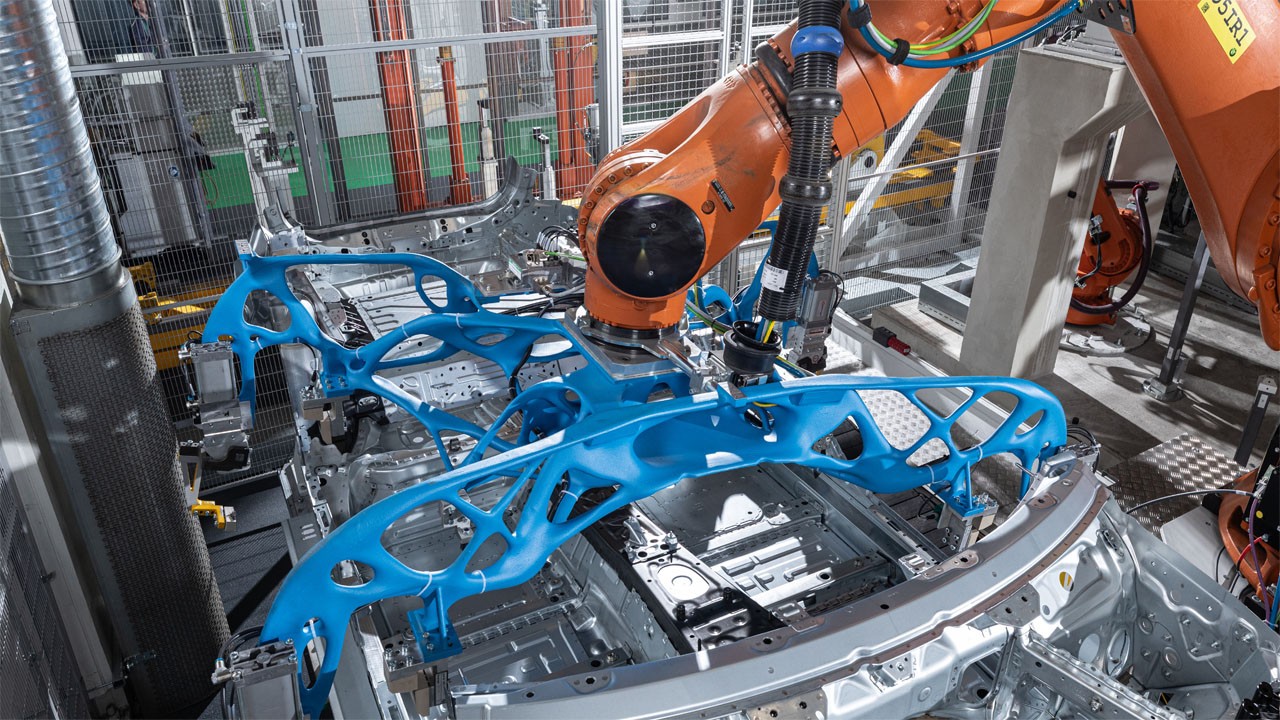
BMW Group pushes 3D printing toward full industrial series production - 3D Printing Industry
BMW Group is moving 3D printing from a prototyping tool to a permanent point of industrial series production, with the first vehicle components made by Wire Arc Additive Manufacturing (WAAM) set to enter series production in 2027. The company's Additive manufacturing Campus (AMC) in Oberschleissheim, Germany, is bringing in a new generation of metal printers, larger build volumes, and digitally networked process chains. This shift marks the point at which 3D printed stops being a workshop for one-off parts and begins behaving like any other production line at scale. The near-term work is to integrate a new fleet of metal systems and connect them into automated, digitally linked lines. Since opening since 2020, the AMC has produced over 1.6 million parts and has also supported the development and validation of the company’s Neue Klasse vehicles and produced 3D-printed components for the latest-generation electric drive.
Würth Industry Closes its 3D Printing Business
Würth Additive Group, an additive manufacturing and digital inventory business of Würth Industry North America, has closed its operations. The Greenwood, IN-based company announced the closure in a brief statement on June 29. The company did not disclose a reason for the closure or details on its workforce, customers, technology, and partner relationships. Würthy Additive's strategy involved helping manufacturers incorporate industrial 3D printing into their supply chains and allowing customers to store qualified parts digitally and manufacture them closer to the point of need rather than maintaining physical inventories. The closure comes despite recent technology partnerships with HP and B9Creations.
Eaton opens U.K. aerospace additive manufacturing center (ETN:NYSE)
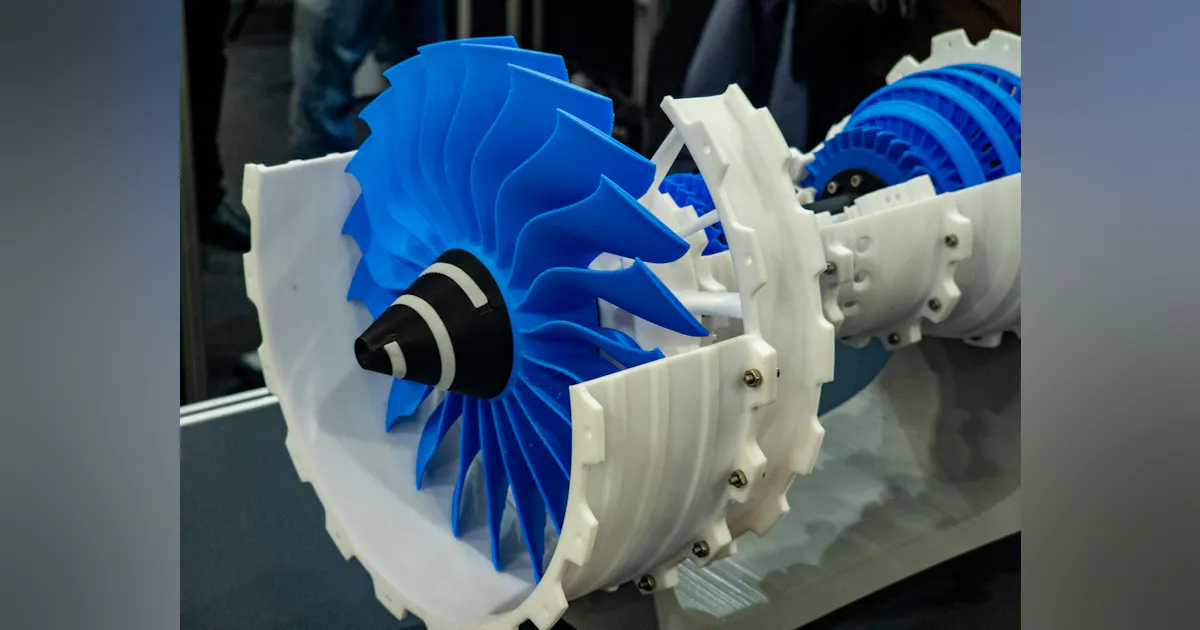
Additive Manufacturing in Aerospace and Defense: Process Selection, Materials Qualification and the Engineering Path to Flight-Ready Hardware
The article discusses the process selection, materials qualification, and the engineering path to Additive Manufacturing (AM) success in aerospace and defense. Laser powder bed fusion (LPBF), directed energy deposition (DED) and metal binder jetting all produce fundamentally different solidification conditions, grain morphologies, residual stress states, and defect populations, which are primary determinants of fatigue life, fracture toughness and damage tolerance in service. The article also discusses the technical foundations of AM adoption in aerospace, including how process physics governs material performance and how design engineers adapt topology and geometry strategies to AM constraints. The author concludes that the most persistent application of AM in aerospace engineering programs is to be compensated in the digital build file and residual porosity levels after sintering.

Pioneers in hydraulics: Domin delivers micron precision with help from Studer
British high-tech company Domin is revolutionising industries with 3D printed hydraulic components, relying on the reliable precision of the Studer S33 universal cylindrical grinding machine. The company's core products are servo valves and ultra-compact high-performance pumps, which enable efficiency gains of up to 90% over conventional solutions. Domin uses the S33 for high precision grinding of the diameters and fine control edges of valve spools for key products such as the S4 Pro, S6 Pro, and S10 Pro series. The firm's customers include aerospace, automotive and motorsport, industrial manufacturing, robotics, shipping, and energy. Domin's products are made from extremely hard, durable, and corrosion proof/resistant maraging steel using 3D metal printing.

Metal Powder Works (ASX:MPW) maps 800MT build for US$1.7m capex
Metal Powder Works (ASX:MPW) has released an investor presentation claiming it can increase its installed capacity from 120 metric tonnes to 800 metric tonnes by 2028 for roughly US$1.7 million of additional capex. This is less than the cost of a single conventional 200MT atomiser and fits within a 165 square metre footprint. The company claims that the DirectPowder platform is a capital-light way to compete with an incumbent supply chain that has traditionally been capex-heavy. The qualification pipeline is already larger than the capacity being built. MPW claims customer qualifications running in three to six weeks, compared to industry standard of six to twelve months. However, the firm's shares have been downunderunder.
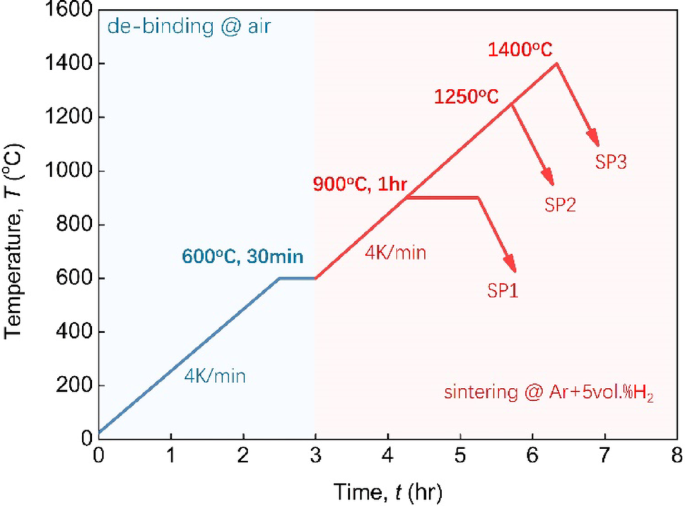
Machine learning-driven characterization of anisotropic microstructures in powder-based additive manufactured metal parts - Progress in Additive Manufacturing
Zhang Q et al and Torresani E et al have published their findings on the progress in Additive Manufacturing. They discuss anisotropy of mechanical property and fracture mechanism for SLM 316L stainless steel under quasi-uniaxial and biaxial tensile loadings. They also discuss the future of sintering science and technology in their findings. The article also discusses the difficulty of measuring surface topography in additive manufacturing. Other articles include a density-based algorithm for discovering clusters in large spatial databases with noise.